
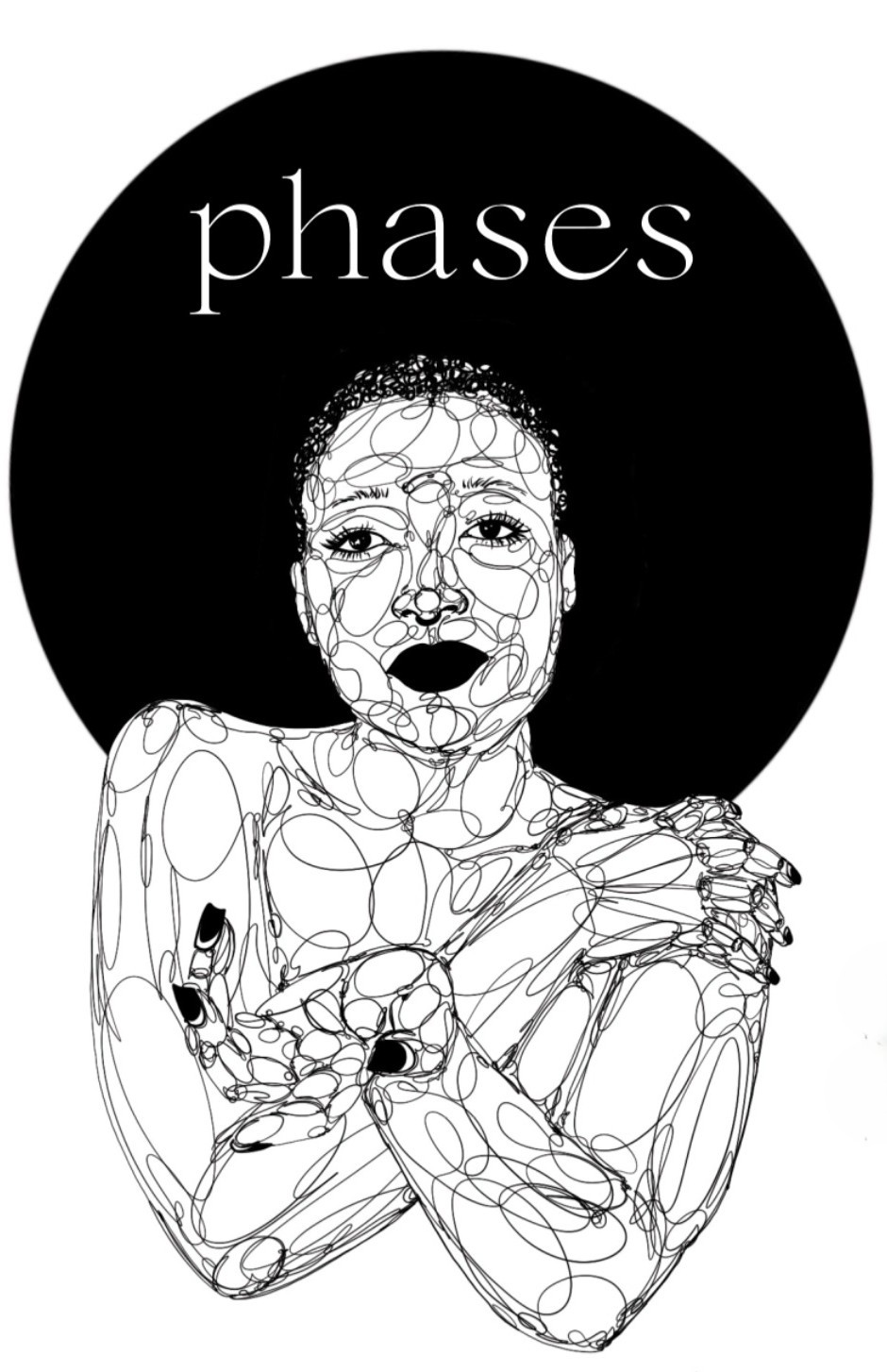
In this electrifying debut poetry collection—written with the ferocity of Rita Dove’s groundbreaking Thomas and Beulah—a critically acclaimed award-winning talent explores a wide range of emotions, from anxiety to ecstasy reflecting the moon’s phases, from Waning Gibbous to Full. Both intimate and intricately structured Tramaine Suubi’s remarkable work is inspired by the moon—its phases’ effects on water, the Earth, and our bodies. Phases relishes in the beauty of change, even that caused by heartbreak. Suubi’s refreshing, vulnerable verse begs to be underlined, memorized, and shared; each of her poems operate as love letters to the cyclical healing that occurs in nature, in our bodies, and in the bodies that have come before us.
Booklist Review
Suubi’s debut collection boldly negotiates the moon’s phases, love, and the cycles of lives connected across generations. The collection’s opening quote from Audre Lorde, concluding with, “I feel therefore I can be free,” establishes a north star for the reader. The poems that follow lay bare the experiences of desire, longing, rejection, grief, and healing. Within the slim, quick lines and lyric form, there’s a shift from piece to piece, revealing more or something different with each turn. The effect is not dissimilar to the moon’s partial visibility when observed by the human eye. We cannot see the entire face of the moon, or the whole arc of this collection, at once. Instead, we examine shadow and light, gradual movement, and trust what’s obscured. While the poems are immediate and vulnerable, there’s a historical memory here, too, and responsibility to the future. Suubi writes, “i speak for my daughter / i speak for my granddaughter / i speak for my great-granddaughter / & they rise through my voice.” Suubi’s voice and the music of Phases will resonate with many.
— Sara Verstynen
December 2024
Debutiful Review
I was first drawn to Ugandan writer Tramaine Suubi’s debut poetry collection, phases, because of its arresting cover that is tender, wiry, and slightly unsettling. Craving more works by African poets, I was compelled to read this book, and I’m so happy I did! Structured by the various phases and effects of the moon from “waning gibbous” to “full moon,” the poems in this deeply sensorial collection span the wholeness and emptiness of love, remembering, desire, joy, anxiety, and questioning. Some, like “sweet nothings,” are contemplative and sweetly resigned, while others like “instincts” and “asphyxiation” feel urgent and vulnerable. The “wisest man” is distinctly ferocious and interrogative. A few still, like “phrases” which is written as a prepositional word-play, are skillfully woven and light. Throughout, it is evident that like the phases of the moon, the author, too, is evolving. I wanted to go slowly with this collection, in order to savor each poem, but I couldn’t stop reading. I encourage anyone who wants to read more poetry, especially by talented Black authors, to pick this book up–it’s beautiful!
— Olufunke Grace Bankole, author of The Edge of Water
February 2025
Highlights
Afrocritik’s Anticipated Books of 2025
Isele Magazine’s 25 Most Anticipated Books of 2025
Republic Journal’s 25 New Books in 2025
Shade Literary Arts’ 2025 Forthcoming Poetry Books
Open Country Mag’s Anticipated Books of 2025
Bookshop’s Poetry to Celebrate BHM 2025
Bookstr’s Atmospheric Poetry in 2025
Ms. Magazine’s The Best Poetry of 2024 & 2025
Chicago Review of Books’ over 100 Notable Debuts of 2025
Brittle Paper’s 100 Notable African Books of 2025
Afrocritik’s Notable African Books of 2025
Open Country Mag’s Notable Books of 2025
 tramaine suubi